What is Endodontic treatment / A Root Filling?
Endodontic treatment removes infected or damaged tissue from inside a tooth. This tissue, called the pulp, contains nerves and blood vessels that help nourish the tooth. After the pulp is removed, the pulp chamber and root canals are cleaned, disinfected, filled and sealed.
What are the benefits of endodontic treatment?
Endodontic treatment saves teeth that would otherwise need to be extracted. Although the pulp is removed, the treated tooth remains alive, nourished by the surrounding tissues. There is no real substitute for your own tooth in terms of health and investment.
What are the alternatives to endodontic treatment?
The alternative to endodontic treatment is extraction of the tooth. Loss of a tooth could create a functional problem such as chewing or an aesthetic problem. Restoring the lost tooth may involve the provision of a prosthetic replacement such as a denture, bridge or a dental implant the costs of which are variable.
What caused the problem with my tooth?
The most common cause of pulp damage is severe decay or a fracture that exposes the pulp to bacteria which may cause infection. Other causes of pulp damage include traumatic injury such as a blow to the mouth, a cracked or loose filling or repeated fillings in a tooth, and occasionally periodontal disease.
Treatment
Preparation of the Root Canals
Endodontic treatment can often be performed in one or two visits and involves the following steps:
1. First the area is carefully anaesthetised and then a small protective sheet called a 'dental dam' is placed over the teeth to keep the area clean and dry.
This is essential for predictable high quality root canal treatment.
2. A small opening is made in the crown of the tooth to allow cleaning of the pulp from the pulp chamber and root canals and to shape the space for filling.
Filling of The Root Canals
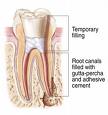
After the space is cleaned and shaped, the root canals are filled with a rubber-like material called 'gutta-percha' and adhesive cement to ensure complete sealing of the root canals.
In most cases, a temporary filling is used to close the opening. If the tooth lacks sufficient structure to hold the restoration in place, your dentist may place a post inside the tooth before the tooth is built up with a solid core.
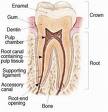
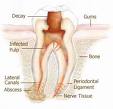
Healthy tooth Decayed tooth Completed root filling
What happens after endodontic treatment is completed?
After the final visit of the endodontic treatment the initial provisional restoration will often require a definitive restoration, and it may be that your dentists will advise on a restoration that protects the tooth from future fracture such as a crown, if the remaining tooth left is has been considerably weakened.
How successful are root treatments?
Endodontic treatment can have a success rate of up to 95% if carried out to a good standard allowing the tooth to remain in function. Problems can occur if the tooth develops decay or the restoration on the tooth fails, or on occasions despite good care the tooth may not heal as expected. Further endodontic treatment or surgery may be carried out if appropriate. A tooth that develops a crack can also be a cause of failure and may result in loss of the tooth.
Does endodontic treatment hurt?
With the use of modern techniques, root canal therapy typically involves little or no discomfort. Often there is pain before treatment and endodontic therapy provides relief.
Will there be pain after procedure?
Cleaning the root canals may cause some slight tenderness but usually over-the-counter pain killers alleviate the discomfort. If pain persists or if you experience severe pain, call your dentist.